Villa Plus — pricing a group holiday honestly
Sole designer for the UK villa-holiday specialist, trading since 1986: their first mobile app, from scratch, and a full web overhaul, both in under a year. Everything was rebuilt around one problem — group booking prices that changed for reasons nobody could see.
People reached checkout and walked away
One metric triggered both products: high drop-offs at the final steps of booking. Session recordings showed people meeting a total they didn't recognise and leaving; the same three pains repeated across recordings and support logs — checkout not matching the start, overwhelmed callers, families splitting bookings or abandoning the trip.
"Restore clarity and trust in the group booking process." THE MISSION LINE, VERBATIM FROM THE PROJECT DECK
£7,000 became £8,200 — and nothing said why
Olivia, 38
- The group
- 15 people across 4 households
- Departures
- Two UK airports
- Budget
- One combined budget she answers for
- The shock
- £7,000 → £8,200 with nothing on screen to say why
The market tells a group of 15 to split up and hope
Before sketching, I mapped how competitors price a booking this size. The best reference points used real-time flight tracking — flights are the volatile half of a villa holiday's price, so that's where the design went next.
| Dimension | The market | What it means for Olivia |
|---|---|---|
| Group size | Most cap a reservation at 8–9 travellers | Her group splits into two bookings, managed by hand |
| Price per person | Few keep it visible as the group changes | Four households can't see their share |
| Price volatility | Some lock prices behind deposits | Money before clarity |
| Flights | The best used real-time flight tracking | The volatile half of the price, made visible — where the design went next |
Save the price you saw. Explain every move since.
The core mechanic is one saved number: fetch the live price the first time someone looks, compare on return. Now the interface has a before and an after — so it can say what happened instead of silently showing a new total.
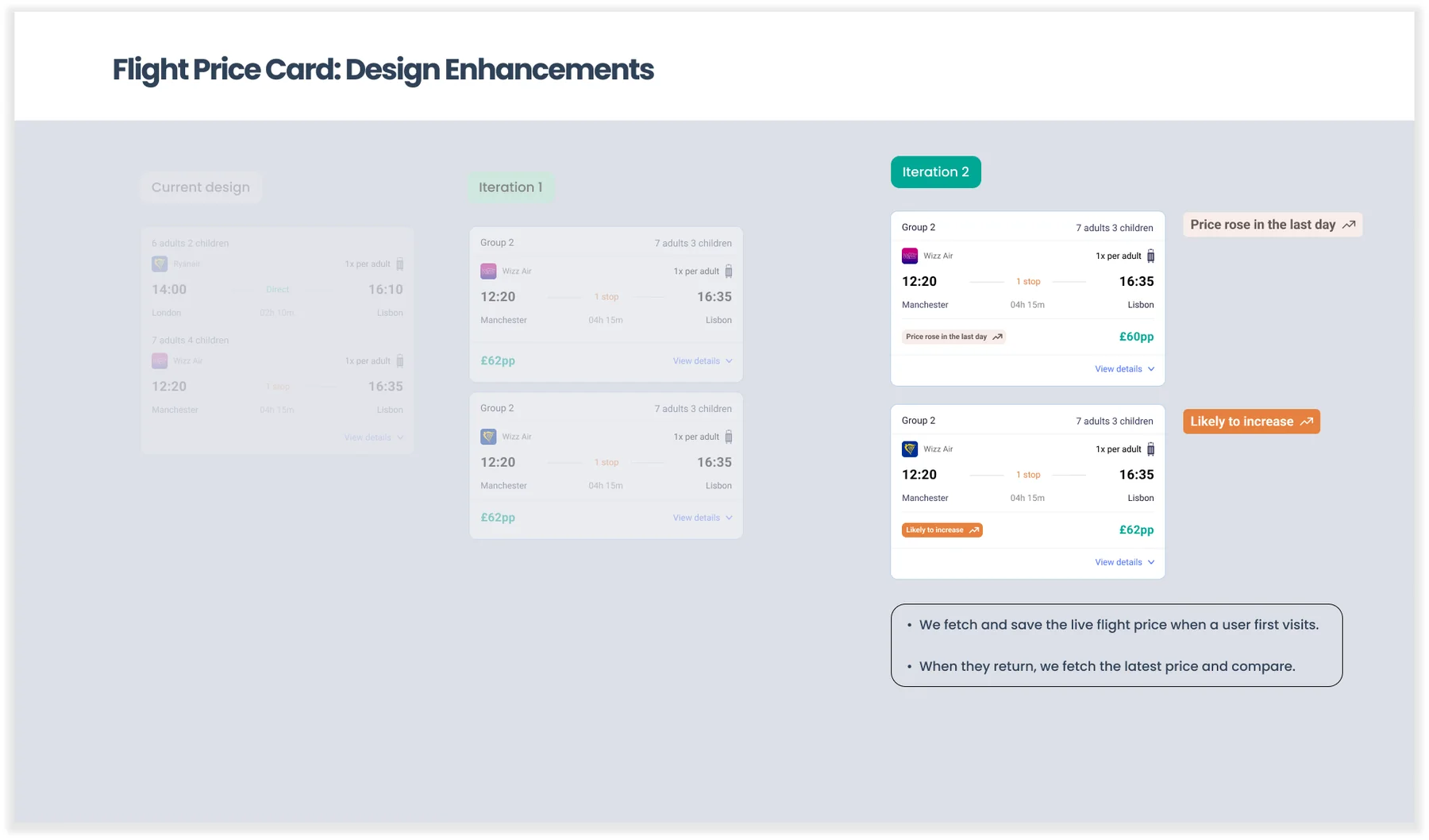
On the flight cards the comparison becomes plain language — honest badges reading "price rose in the last day" and "likely to increase" (three documented iterations before they settled). The breakdown splits the total by household so four families each see their share, and for time-sensitive fares the flow makes one promise explicit: "we can hold this price for the next 10 minutes."
What changed, and why
- No changes yet — every move you make will be explained here.
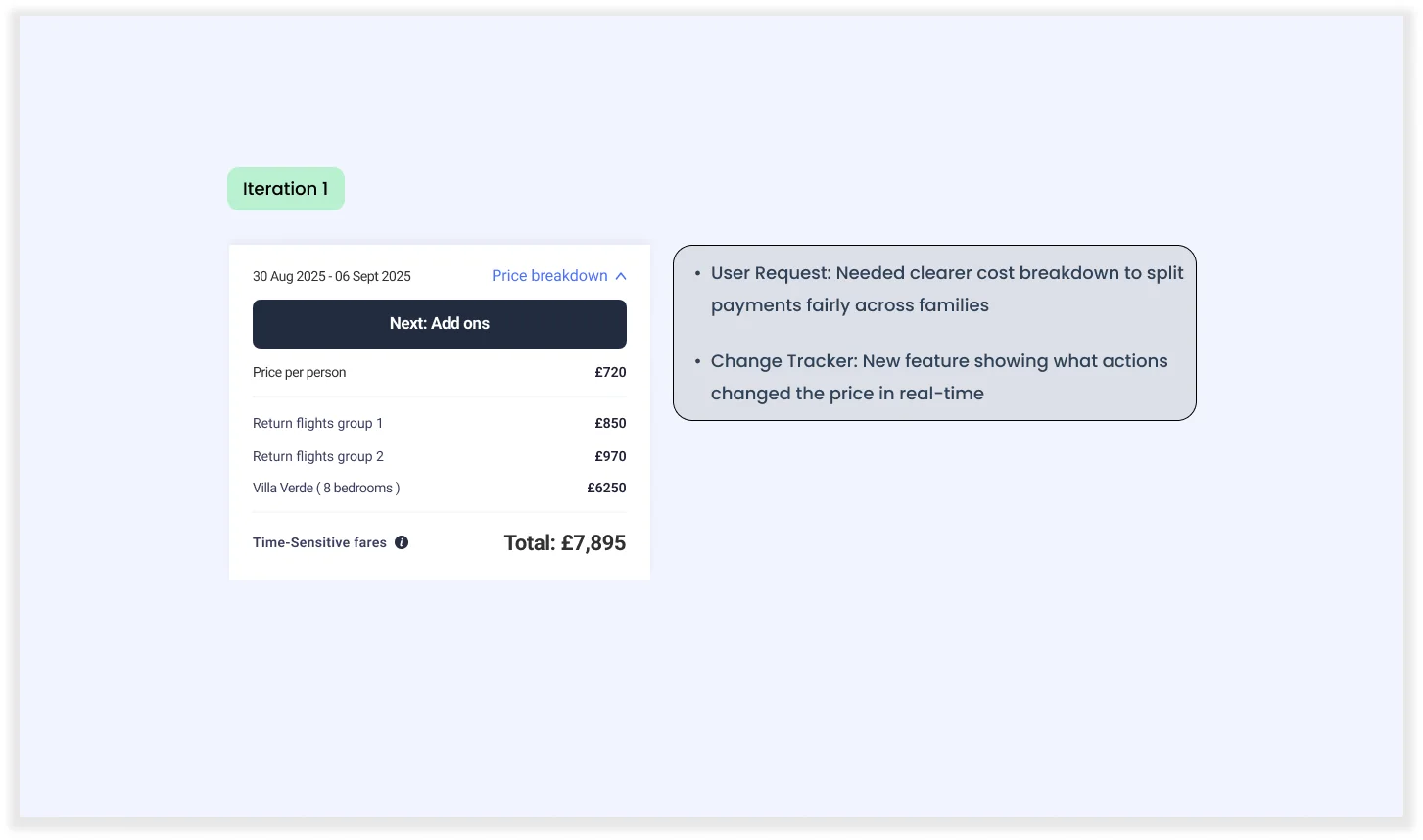
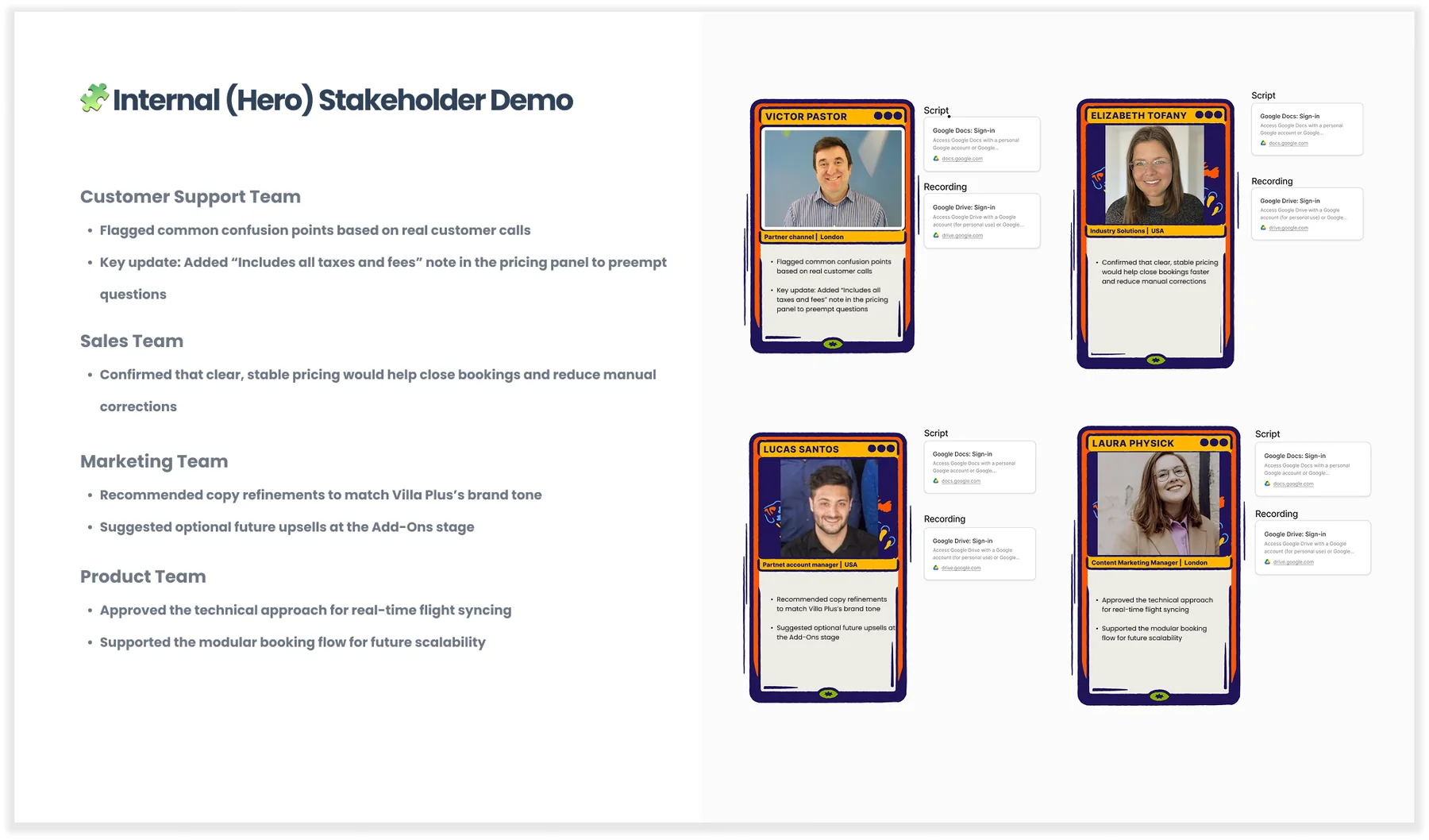
Two details came straight from listening. The "includes all taxes and fees" line under the total was added after customer support told me what callers most often wanted confirmed. And a setup step — "how is your group travelling?" — was added after watching users struggle to assign 15 people to two departure airports; asking early meant the rest of the flow never had to.
Five planners. Five completed bookings.
Recruited to match the persona — people who plan group trips with someone else's money in the mix — and run through the full journey, group setup to final split total. Their clearest ask, a save-quote feature, went on the backlog.
Trust is a pricing feature
What this project settled for me is that trust is a pricing feature — something you design, iterate and test like any other part of the product. The Change Tracker mattered more than any visual refresh in either the app or the web overhaul, because it turned surprise into explanation. Nothing in the design stops a price from moving; it makes sure that when one does, the person holding the budget for four families can see why.
Source notes
- Figures and quotes — the mission line, the £7,000 → £8,200 booking, competitor caps of 8–9 travellers, the Manchester–Lisbon fares at £60–62 — are from the Villa Plus project deck, slides shown above.
- Olivia is a fictional composite persona from the deck; testing figures are from the usability test of 5 persona-matched users.
- Full interactive case study: withcontexts.com/artifacts/villa-plus